St. Croix — A Caribbean Island Escape

Last Update
/
5
Min
Because I had to catch a 6 a.m. flight, I dragged myself out of bed at 3:30 in the morning. I spent most of the journey in a drowsy haze. Only about an hour before landing did I finally come to my senses. Looking out the window, below was an endless expanse of Caribbean Sea. Clouds cast their reflections on the water in scattered patches. It reminded me of Africa's Masai Mara — I remembered the guide saying "Masai Mara" means "spotted," because cloud shadows dapple the African savanna. Suddenly a string of green islands appeared in my view — I guessed this must be St. John. St. Thomas, St. John, and St. Croix are America's three Caribbean islands, collectively known as the U.S. Virgin Islands. St. Thomas is the capital and feels more like a small Chinese town from the 80s or 90s, shaped by commercialization. Over 90% of St. John is national park — clean and picture-perfect. St. Croix is the largest of the three, and the only one completely surrounded by the Caribbean Sea; the other two are bordered by the Atlantic to the north and the Caribbean to the south. I'd long heard that to experience the slow island life of the locals, St. Croix was the place to come. After a busy year, I just wanted somewhere to decompress, and St. Croix was perfect. From the air, St. Croix looked flatter than the other two islands — modest homes dotted the green-covered island, a picture of everyday life.
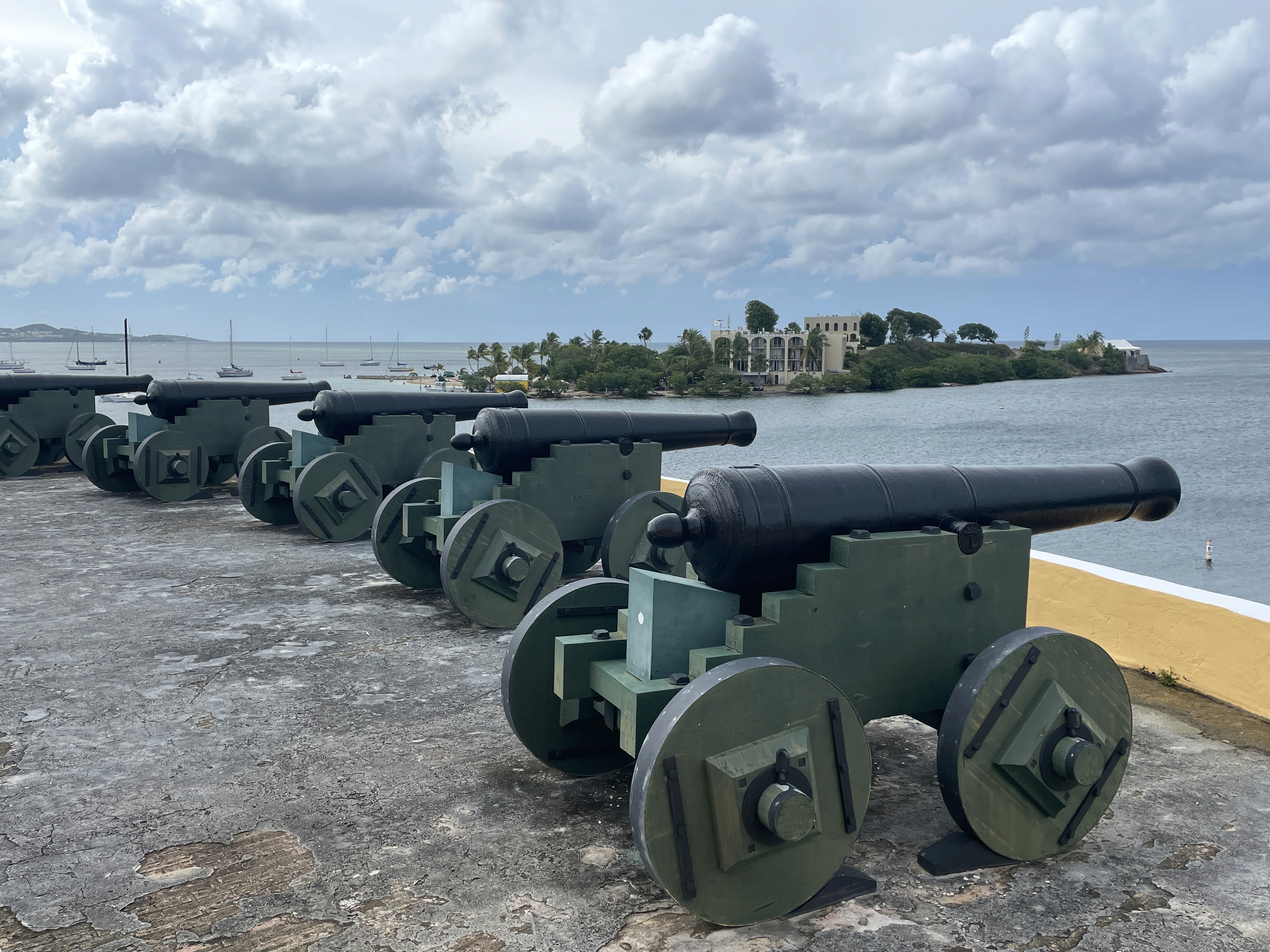
After picking up a rental car at the airport, we set off. Since Columbus discovered it in the 15th century, St. Croix was colonized successively by the Dutch, English, French, and Danes before finally being transferred to the United States. The island still follows the tradition of driving on the left, which felt awkward at first. Especially when there were no other cars on the road, I'd unconsciously drift to the right. One night while driving, a car came straight at us with its headlights blazing — only when it saw us did it swerve into the left lane. Probably a newcomer not yet used to the rules. The roads were poorly maintained, riddled with potholes of every size and depth — hit one carelessly and the car would lurch with a loud bang.
The apartment we'd booked on Airbnb was on the north-central shore of the island, in a place called Cane Bay, less than half an hour from the airport. The drive took us past green farmland where a few horses and a flock of sheep grazed leisurely; the roadsides were lush with dense trees, long vines hanging from the branches. Everywhere on the island stood the ruins of fortress-like sugar mills. This sleepy little island today once experienced a sugar industry boom during the 18th-century colonial era. Around a sharp bend, a brilliant blue sea suddenly came into view. Cane Bay sits between mountains and sea — stunningly beautiful. With no cell signal, we navigated by photos until we found the little blue courtyard. Inside were two two-story buildings with eight apartments total. We climbed the stairs, opened the door — the room looked comfortable and felt like home. Through the floor-to-ceiling balcony windows stretched an endless expanse of Caribbean Sea. I love the Caribbean blue — clear and transparent, like ribbons of silk rippling through the water. Standing on the balcony, a few palm trees swayed in the breeze, and waves crashed against the rocks below. Facing that view, all the fatigue of the long journey simply dissolved. The apartment was newly renovated and fully equipped: a gas stove, range hood, cookware, a juicer, a coffee maker, and even a small air fryer. The walls were covered with ocean-view photos and words like "joy" and "happy." The photos looked like the owner's own snapshots rather than professional shots. Knowing I'd be spending the next nine days here, I felt genuinely happy.
Once settled, we showered and found ourselves starving. Less than five minutes' walk away was a restaurant called "Off the Wall," supposedly famous for its pizza. The name comes from the fact that just 200 to 300 meters offshore, the seafloor drops off a cliff more than 4,000 meters deep — part of the Puerto Rico Trench, which reaches over 8,600 meters at its deepest, only slightly shallower than Mount Everest is tall. This is a world-renowned diving destination where you can walk straight from shore into the water with a tank on your back and swim to the coral reef without needing a boat. The "restaurant" was really just a large open-air canopy on the beach, with a square bar in the center and about ten tables and chairs scattered around it. Simple as it was, the view was limitless. We sat down, the sea breeze ruffling our hair and blowing away the leaden weight of bad moods. The world suddenly felt vast and boundless — so many things could be surrendered to the wind, the sea, the sky, the earth. I ordered a Painkiller cocktail and a large pizza and ate ravenously. By then it was dusk, and the sunset over the sea was magnificent and sweeping. The sun burned a deep crimson, setting the entire sky ablaze. As it slowly sank into the sea, the sky shifted from pink to golden to grey — a spectacular color performance that unfolded over dozens of minutes. Living in Cane Bay puts you close to nature. After darkness fell, our world went to rest while another world came alive. Insects in the mountain forest played a symphony, voices rising and falling, high and low, long and short.
The Painkiller
Back when I was still in DC, a friend recommended Pusser's in Annapolis, saying they made the best Painkiller. The Painkiller is a cocktail that originated at a bar called the Soggy Dollar in the British Virgin Islands. Made with rum, pineapple juice, orange juice, and coconut cream, then topped with a sprinkle of nutmeg — a good Painkiller delivers the refreshing tartness of pineapple, the silky smoothness of coconut cream, the sweet-sour bite of orange, and the kick of rum: the full tropical experience, and genuinely capable of easing your troubles. The ratio of ingredients is each bar's secret formula and defines the drink's character. Prefer sweetness? Add more pineapple juice. Prefer a smoother mouthfeel? More coconut cream. Want a stronger buzz? Pour heavier on the rum. A single Painkiller can come in a fresh and light style, a refined and indulgent style, or a serious drinker's style — something for everyone. There's debate about which rum to use: some insist only Pusser's rum from the British Virgin Islands is authentic, but most bars use Cruzan rum, produced right here on St. Croix. The Painkiller on St. Croix never disappointed. At every restaurant and bar on the island, I ordered one without fail — it had become a ritual.
The Landing
The Landing Beach Bar is another restaurant on Cane Bay beach, lively and bustling, functioning almost like the local community clubhouse. Residents and visitors alike settle in, gazing at the endless sea, enjoying the breeze, eating, chatting, and sipping drinks. The atmosphere is casual — shorts and a t-shirt, walk right in. The owner, Win, appears to be in her seventies — tall and slender, her face etched with deep wrinkles. She has a kind and gentle air but her eyes are steady and optimistic; locals call her "the Saint," "Mama," and "the Queen." Every time we visited, she was bustling about without a moment's rest. The restaurant was short-staffed those days, so Win's daughter and granddaughter came to help — the whole family warm, cheerful, and hardworking. The restaurant serves freshly caught seafood daily. The tuna poke melted in your mouth. The Caribbean lobster we ordered two days in a row — cooked perfectly, then pan-seared in butter, fragrant and tender. Sunday brunch featured bottomless mimosas and complimentary beignets. The beignets had a perfectly crispy shell with a soft, fragrant interior — a hundred times better than the famous Café Du Monde in New Orleans. Little Cane Bay has three restaurants, but this one became the de facto canteen for everyone staying in the area, thanks to its good food, reasonable prices, and relaxed atmosphere. Every day we came to eat, we'd run into someone we'd just met. Christina was a well-traveled New Yorker who spent her days online tracking the situation in Sri Lanka — her next destination. Mike was a retired police officer from Indianapolis; we talked about Black Lives Matter until late into the evening. Randy was a co-founder of local brewery Leatherback; his young girlfriend told me he was too modest — that he had "lived five lives." I loved sitting at the bar, sometimes gazing out at the crystalline, gem-like Caribbean Sea, sometimes watching strings of raindrops fall from the eaves on rainy days while listening to the rain, sometimes waiting for nightfall as the mountain insects started their chorus. Every stranger had their own story. The world is so vast, the stories so many.
Tropical Storm Earl
Waking early the next morning, the sea that had been as quiet as a lady the day before had transformed overnight into a raging, unruly teenager. It thrashed wildly, layers of white foam flying like skirt hems in the wind. Waves hurled themselves at the shore rocks and shattered. The palm trees in front of the house were yanked and whipped by the wind as though they might snap at any moment. A heavy dark cloud pressed down overhead as rain poured in torrents, drumming relentlessly on the rooftop. Then suddenly the power went out. The islanders took it in stride — within ten minutes a backup generator kicked in and everything returned to normal.
After a few hours of fury, the sea tired, the wind died down, the rain stopped. By afternoon the storm had finally passed. A clear blue sky, clean bright air, the world quiet again, and the heat returning. We were relatively lucky — only a mild tropical storm. The week after we left, Hurricane Fiona raised fifteen-meter waves and left nearby Puerto Rico without power for several days. Then came Hurricane Ian. The tranquil island is beautiful and serene in calm weather, but terrifying and destructive under a hurricane.
Christiansted
Christiansted is the largest town on St. Croix. The downtown area is lined with rows of colorful buildings. The street-facing structures have open-air arcades where pedestrians can walk sheltered from the sun on sunny days and the rain on wet ones. A white church still bears the symbol of Danish King Frederick VI carved into it — FR. All around town, remnants of hurricane damage are visible: crumbling walls and broken structures. The scene constantly alternates between the cleanliness of a developed country and the poverty of the third world, a jarring contrast that left me unsettled. Beyond the few downtown blocks, the streets were nearly empty, the air heavy with a sense of decline.
St. Croix is the birthplace of Alexander Hamilton. It's said his financial acumen was sharpened by his early experience exchanging British, French, Danish, and Spanish currencies on the island.
Walking along the waterside boardwalk, schools of tarpon — about a meter long each — glided through the water. Tourists threw leftover pizza, burgers, and fried chicken to feed them. At the sight of food hitting the water, the fish leaped up to compete for it. One man, apparently acquainted with someone at a nearby restaurant, got a chunk of raw dough, tore off pieces, and threw them in — the fish gobbled those up too, though I wondered if they'd get stomachaches.
Jazz
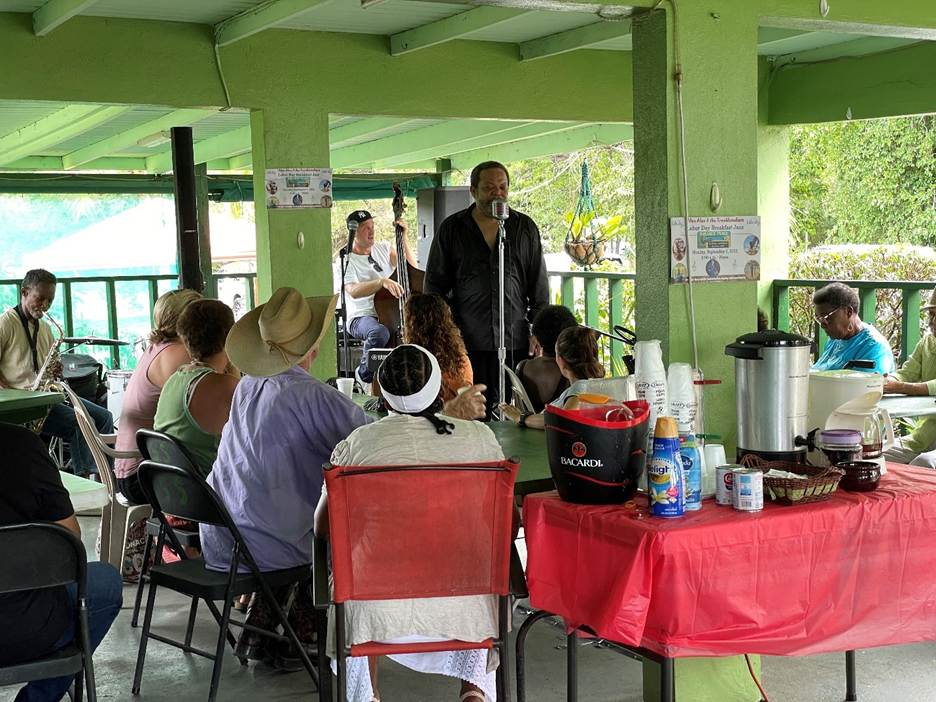
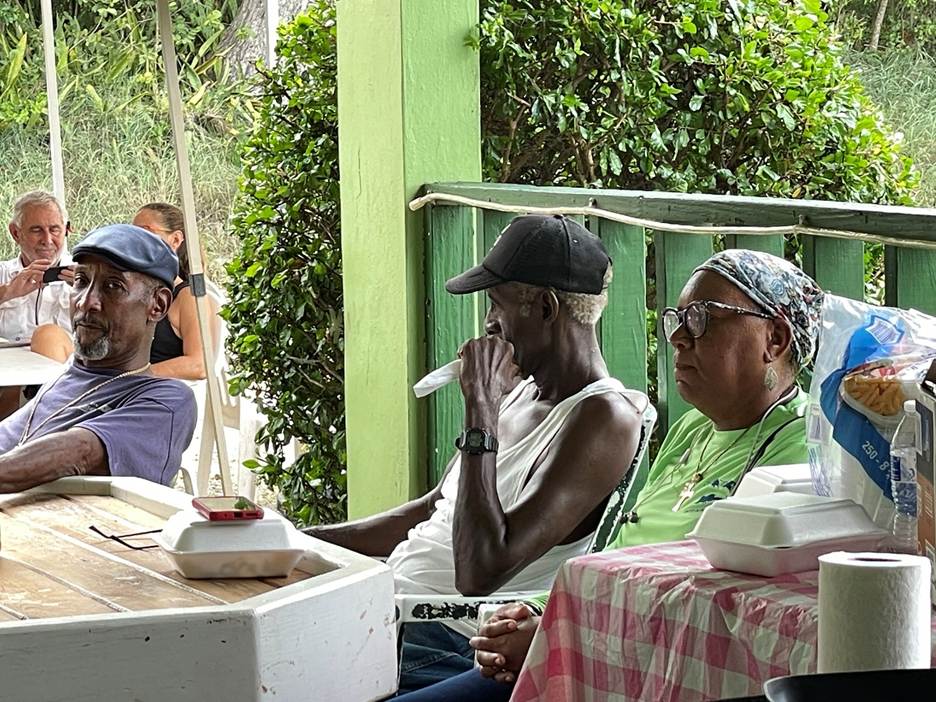
The day before, I heard Christina at The Landing mention that there was a local gathering nearby with a buffet and jazz performance. I asked where. "Drive down the road along the water, and when you see a tall mango tree, turn right and you're there." On the island, people navigate by physical landmarks — a large tree, a gas station, a red house. There's no cell signal, and GPS is useless. Following Christina's directions, we actually found it. Under a canopy stood a long table covered with food, most of which I couldn't name but all of which was delicious. What looked like potato salad was my favorite — when I went back to ask the woman serving it, she told me it was breadfruit. I saw it in the supermarket a few days later and bought some to try — ripe breadfruit has a texture somewhat like durian but without the fruity smell, tasting more like a starchy staple like bread or rice, which explains the name. With my imperfect English, I accidentally said "plantation" instead of "fried plantains" — a sensitive word in English, always associated with slavery. A four-piece band performed, led by a large Black man with a powerful, resonant voice full of passion and charisma. We found a table and sat down. Most of the crowd were locals and long-term residents. A Chilean woman had come, fallen in love with the place, and stayed. A Canadian chef had done the same. People tired of big city life come here hoping to find simplicity and peace.
The week on the island was full of new discoveries. In the courtyard I saw a cashew tree for the first time — yellow fruit shaped like bell peppers, with a black bean-shaped shell hanging below, the cashew nut inside. On the road to Salt River, I saw bright red crabs that weren't yet cooked — highly alert, scuttling into their burrows the moment anyone came close. And I tasted Mexican guava for the first time — good flavor, not too sweet, creamy, but packed with seeds and laborious to eat.
Buck Island
Snorkeling at Buck Island was the highlight of the trip. The small island lies north of Christiansted, just twenty minutes by boat. The entire island is a national park — the west side has a soft white sand beach, the east side has coral reefs. The coral here was spectacular: columns, fans, domes shaped like human brains, in every color. Some coral comes within half a meter of the surface. You have to swim with great care — contact with coral transfers oils from human skin and can kill it. Coral grows incredibly slowly, and in recent years rising global temperatures have caused massive coral die-offs. Our guide led us through a forest of coral formations, and almost immediately we encountered a large, colorfully patterned lobster with antennae nearly half a meter long. Brilliantly colored fish moved through the coral, some solo, some in schools. The underwater world is a place of wonder.
Annaly Tide Pools and Hermit Crabs
Today we hiked to the Annaly tide pools. The heat and humidity were intense. Though the trail was mostly shaded, I was still drenched in sweat — wiping my face with both hands before we'd even reached the pools, my clothes completely soaked through.
On the mountain path, I noticed many small red crabs carrying shells on their backs. Climbing along, they'd sometimes lose their footing on steep ground and tumble down. At first I assumed they were "snail crabs," but as we walked on I saw one carrying a conch shell, then another carrying a green clam shell. Strange — were these different species? The shells looked exactly like snail shells, conch shells, and clam shells.
Back at the apartment I googled it — fascinating! The shells genuinely don't belong to these crabs. They're hermit crabs. Though they have hard claws, their bodies are soft like a snail's, and to protect themselves they find empty shells of the right size, climb inside, and carry them wherever they go. The shell can be a conch, a snail shell, even a holey rock or tin can — anything that offers protection. As they grow, they must keep finding larger shells to move into. Even more remarkable: if a hermit crab finds a shell that's too large for it, it waits beside it. When another crab arrives and the shell is also too big, that one joins the queue, and they line up from largest to smallest. When finally a crab of just the right size comes along, it moves out of its old shell into the new one, and the waiting crabs each shift into the shell vacated by the one ahead of them, passing their own shell down to the next smaller crab.
Through the trees and another ten minutes in full sun, we reached the shore. The coastline was black volcanic rock — uneven and varied in height, shaped by the rise and fall of tides into these natural pools. Getting close to the pools required climbing across the rocks like Spider-Man — the surfaces were sharp and slippery from the waves, demanding careful footing. The pools ranged from large to small: the biggest were four or five meters wide, deep enough to jump into and swim — nearly two meters at the deepest — while the smallest were no bigger than a bathtub. Seawater rushed in, forming small cascading waterfalls. The water was crystal clear; you could see colorful fish and sea urchins below. I submerged myself in a pool and the sensation was extraordinary — surrounded by clear, still water, while just beyond the rocks, the open ocean surged. Before coming, locals had warned us to watch the tide schedule and leave before high tide. When we checked the time it was nearly time, and we climbed out and headed back.
Sandy Point
When I pushed through layers of forest and stood on the beach at Sandy Point, I was deeply moved. In the vast open space there was only me — a long white sand beach, sea on three sides, brilliant blue water, and my small solitary figure standing there. It felt like the edge of the world: nothing but sea and sky, pure and untouched. No wonder The Shawshank Redemption chose this location for its final scene — after decades of imprisonment, never surrendering hope, finally escaping injustice and the world, to live a simple life in this paradise. Sandy Point is a sea turtle nesting ground and a designated wildlife refuge. From April through September, the nesting season, the beach is closed to the public.
The Warmth of the People
After a few days, I was deeply struck by the genuine goodness of the people of St. Croix — a spirit that quietly purified everyone who visited. Several times I was surprised and moved by their simple, unpretentious kindness, marveling that a place this wholesome still existed in the world.
One evening after dinner at a restaurant, we asked to buy some beer to take back. The server told us, "You'd be better off buying from the restaurant near where you're staying — our system doesn't have a wholesale price, so it'll be more expensive here. Plus the owner there is the founder of the local brewery, so you'll get a better deal."
Our small complex had only eight units, and guests and owners quickly got to know each other. Kevin owned one of the apartments and became our go-to for everything — WiFi not connecting, washing machine not running, smoke detector battery dead — he was always ready and willing to help.
One morning I went swimming in the sea and came back to find I'd locked my keys in the car. I had a snorkeling tour to get to at noon. In a panic I reached out for help in every direction. I called the rental car company first — the rep said they'd see if someone could bring a spare key. While waiting, I went to the nearby restaurant for help. A small group gathered around with suggestions. A waitress offered to pry it open; a man shook his head — do that wrong and you'll break the window, and the rental company will charge you. "What do I do then?" I said. "I have a tour at noon." He reached into his pocket and pulled out his own car keys. "Take my car." "What?" I wasn't sure I'd heard right. How could a stranger offer me their car? "My car's parked out back. My wallet's in the glove compartment — just make sure no one takes it." I thanked him again and again, overwhelmed with gratitude. An absolute lifesaver. I drove back to change into dry clothes. Just then the rental company called — someone was already on the way with the key. I rushed back to the parking spot, where a young man in a Jeep was asking passersby something. I hurried over. "Are you from the rental company?" "Yes, yes — the car's already unlocked." I thanked him profusely. As he turned to leave, I handed him fifteen dollars. He tried to refuse; I insisted. Then I ran back to the restaurant to return the car keys, slipping twenty dollars in alongside them. The man took the keys, glanced at the money, and said, "Really, there's no need." I insisted he keep it. He finally accepted and said with a grin, "I'll buy you drinks later." Honestly, I wasn't sure if offering money was appropriate in a place this pure-hearted — whether it felt too transactional. But the crisis was resolved, with the help of so many kind strangers. I felt a deep sense of peace: here, someone will always help you without expecting anything in return. Warm and reassuring.
Goodbye
On the day we arrived, a brilliantly green iguana ran out to greet us — still a teenager by the looks of it, waddling across the ground in an endearingly clumsy way. On the last morning, just as I was heading upstairs to get my luggage, I found it sitting right at the foot of the stairs, blocking my path. I thought it didn't want me to leave. I crouched down to take its photo; it wasn't afraid at all and tilted its head to pose. The vacation wasn't long, but what began as a tourist's excitement and novelty unexpectedly became something else entirely — I'd become part of the local community. Leaving was hard.
Every morning I woke to a view of brilliant blue, palm trees swaying in the breeze. Sitting on the balcony with a cup of tea, listening to the waves crash on the rocks below. Nine days of the island's beauty — blue skies and Caribbean sea, tropical rainforest, a colorful underwater world, and the genuine warmth of its people. Goodbye, St. Croix. Goodbye to all the people and moments that passed briefly through my life yet left a lasting mark.